
FAO Zone 34 • Wholesale supplier • Europe export

Mauritania octopus supplier for Europe

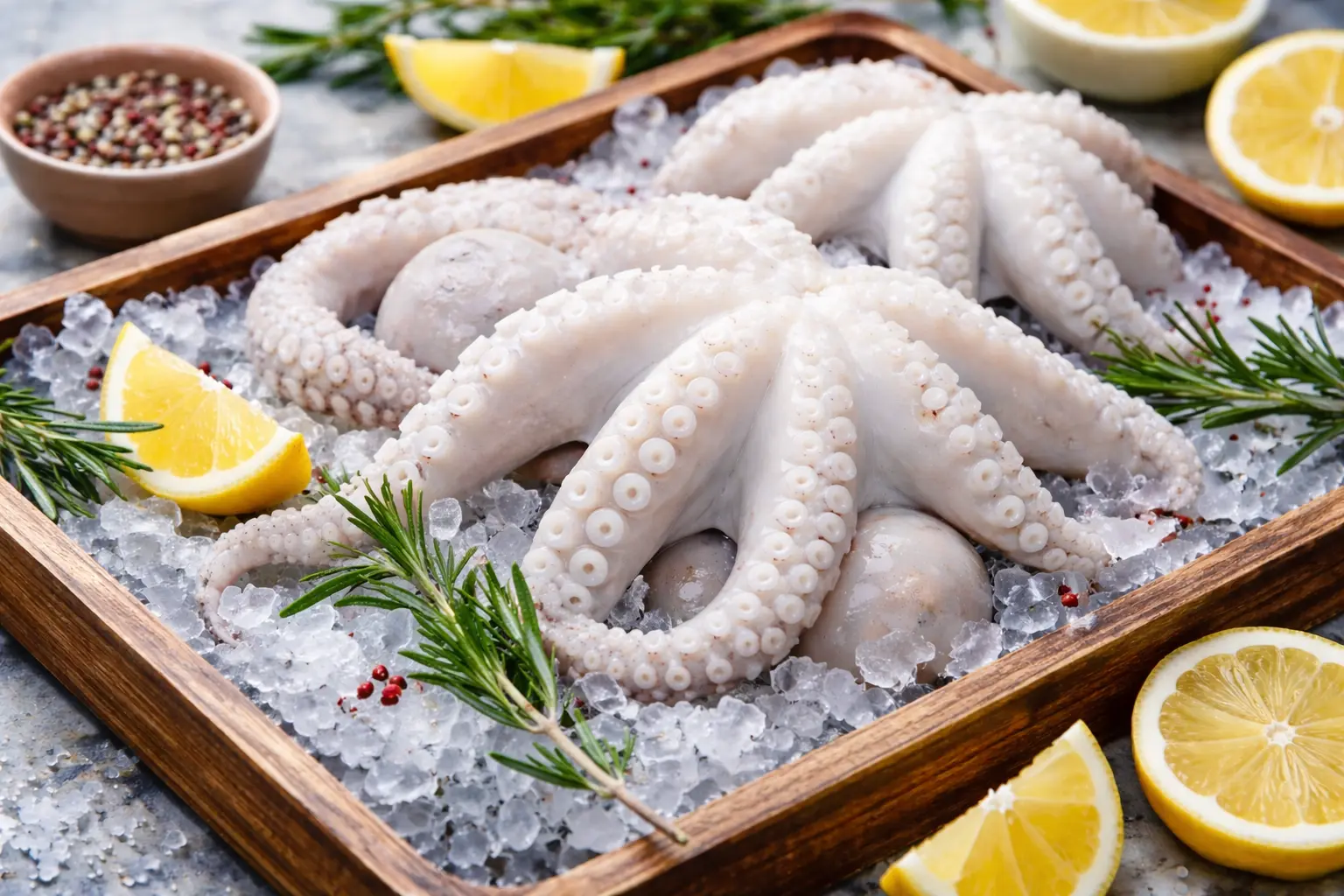
Mauritania octopus (Octopus vulgaris) is a premium-origin sourcing option for European seafood buyers looking for FAO 34 origin, stable sizing, IQF or Block formats and a product story that is easy to document for purchasing and quality teams.

At Mauritania Octopus Export, we supply frozen Mauritania octopus to importers and distributors in France, Spain, Italy, Portugal, the Netherlands, Germany and Belgium. We offer IQF and Block formats, sizes T1 to T7, with export documentation, cold-chain control and lot-by-lot traceability.

📍
Mauritanian origin FAO Zone 34 origin
❄️
Wholesale export formats IQF, Block, T1-T7
EU docs and traceability Buyer-ready file
Premium frozen Mauritanian octopus — export quality for Europe
🌍

Mauritanian origin

Atlantic origin with a clear FAO Zone 34 sourcing story for buyers and quality teams.

🏷️

Commercial formats

Whole, tentacles and cleaned octopus in IQF or Block, sized for wholesale markets.

🛡️

Import documentation

Lot tracking, EU documents and cold-chain records structured for European import.

Buyer snapshot

If you are sourcing Mauritania octopus for Europe, the core buying signals are straightforward: stable origin, readable sizes, clear freezing formats, usable export documents and traceability your teams can verify.

Production and fishing zones in Mauritania

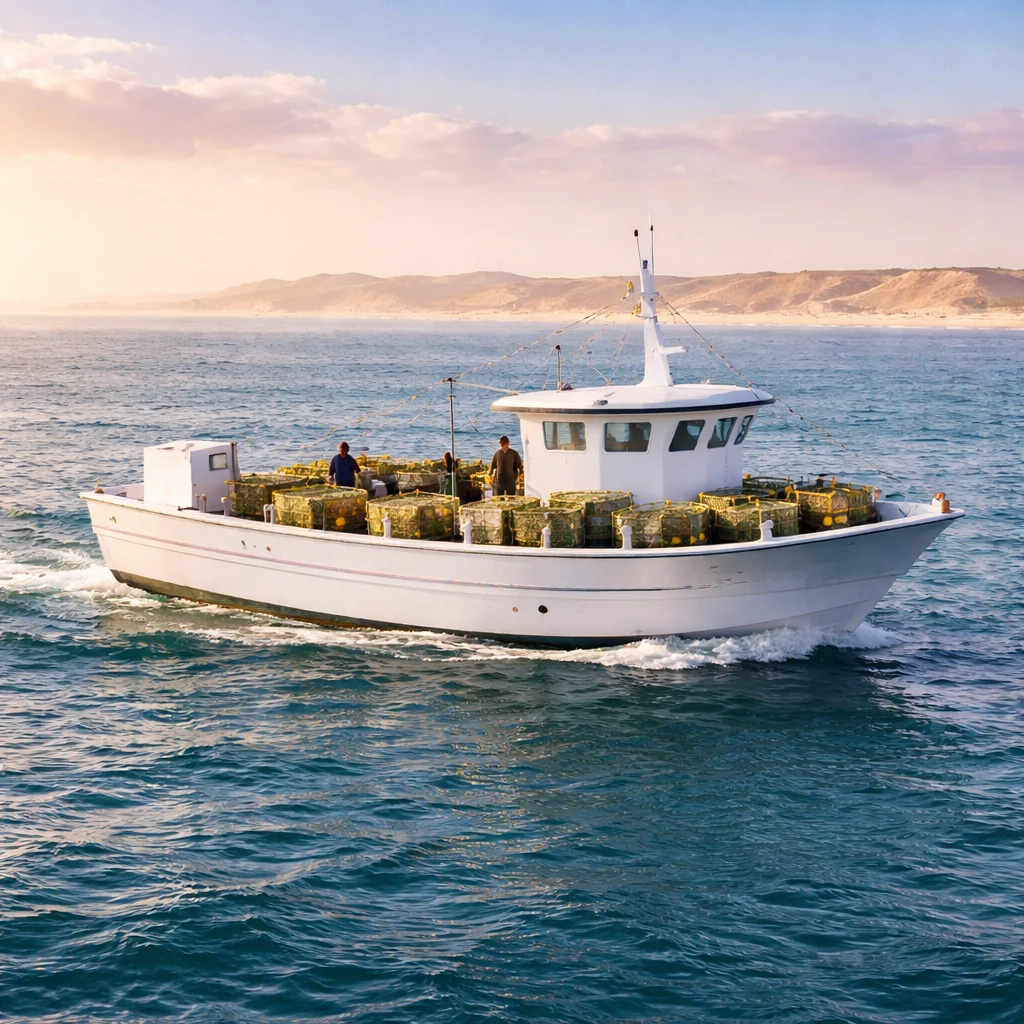
Artisanal octopus fishing boat in Mauritania — FAO Zone 34, Atlantic waters

FAO Zone 34 (Eastern Central Atlantic) covers over 700 km of Mauritanian coastline. Mauritania's EEZ extends 200 nautical miles and offers depths of 50 to 300 metres, the preferred habitat of Octopus vulgaris. The cold Canary Current upwelling continuously brings deep, nutrient-rich water to the surface, generating exceptional biological productivity: high crustacean and small fish density, rapid growth, dense firm flesh with a cooking loss 5–10% lower than tropical-water species — the decisive quality criterion for European professional buyers.

Fishing is regulated by the Mauritanian Ministry of Fisheries and IMROP (Institut Mauritanien de Recherches Océanographiques et des Pêches), which sets annual quotas and mandatory biological rest periods. Vessels operate under annual licences and declare their catches at each landing, in accordance with EU Regulation EC 1224/2009 on fishery product traceability.

🗺️
FAO Zone 34 — 200 nautical miles
🌊
Cold Canary Current upwelling
⚖️
IMROP + annual licences

Formats and commercial sizes

📦

Sizes T1 to T7

Full range of commercial grades, from T1 (> 4.0 kg (super jumbo)) to T7 (0.5–0.8 kg). Mixed-grade orders available within a single container to match your market requirements.

Full size catalogue →
❄️

IQF & Block freezing

Criteria IQF Block
Freezing−35°C individual blastPlate mould
Pack formatPiece by piece10–15 kg blocks
Glazing12–18%8–12%
Best forFoodservice, portionsIndustrial, canneries
Shelf life at −18°C24 months

Whole octopus (Flower)

Premium product for demanding markets — ideal for foodservice and specialist distribution.

✂️

Tentacles and cleaned octopus

Formats tailored to food processors and industrial buyers seeking efficiency and yield.

Size chart T1 to T7 — weights and uses

Commercial sizes are defined by the individual net weight of frozen octopus, excluding glazing (5–8% depending on IQF or Block format). The range comprises 7 grades: T1 to T7. The following table reflects the standard grading used in the Mauritanian octopus industry:

Size Net unit weight Typical use Target market
T1> 4.0 kg (super jumbo)Whole octopus, table presentationFine dining, hotels
T23.0–4.0 kgWhole grilled, visual presentationPremium fishmongers, hotels
T32.0–3.0 kgLong cooking, brasseriesBrasseries, premium supermarkets
T41.5–2.0 kgReady meals, individual portionsFood industry, caterers
T51.2–1.5 kgCanning, tentacle cuttingCanneries, seafood salads
T60.8–1.2 kgStews, sauces, portion cuttingCollective catering
T70.5–0.8 kgTapas, snacks, startersSpanish tapas bars, event caterers

Weights net of glazing. Mixed-grade orders available within a single container. Full catalogue →

Quality and sanitary compliance

The Mauritanian octopus we export complies with the sanitary standards required by the European Union. We ensure clear batch traceability from the vessel through to final shipment, in accordance with EU Regulation EC 1224/2009.

Each order is accompanied by the full documentation required for European import: health certificate, EU-approved establishment number, lot traceability sheet and temperature records — ensuring a smooth customs process for our partners.

🧪

EU sanitary standards

Full compliance with EU requirements for third-country fishery product imports.

🔎

Batch traceability

Every carton traceable from fishing vessel to European importer — vessel, FAO Zone 34, approved plant, production date.

📄

Export documentation

Health certificate, EU establishment number, customs documents — all provided with each shipment.

Logistics and export to Europe

We ship from the ports of Nouadhibou and Nouakchott in refrigerated containers (reefer) maintained at −18°C, fitted with a temperature recorder. Estimated transit times: 10–12 days to Algeciras (Spain), 12–15 days to Le Havre or Marseille (France), 15–20 days to Hamburg (Germany).

Order preparation (sorting, packaging, sanitary and customs documentation) requires 5 to 10 additional days depending on volumes. Standard minimum order: one 20 ft container = 18–22 tonnes of frozen octopus. Mixed-grade orders are common.

🚢
Incoterms FOB / CFR / CIF Terms negotiated according to the buyer's requirements.
🧊
Reefer containers −18°C On-board temperature recorder, monitored at every port of call.
📍
Ports FR / ES / DE Le Havre, Marseille, Algeciras, Hamburg — regular rotations.

Why choose a Mauritanian octopus exporter?

  • Dense flesh, low cooking loss — the cold Canary Current upwelling produces superior muscle density compared to tropical-water species (Peru, India).
  • Sizes T1–T7 available year-round — full range, mixed-grade orders supported within a single container.
  • IQF and Block available — individual freezing at −35°C or 10–15 kg moulds depending on your industrial processing needs.
  • EC 1224/2009 traceability — lot, vessel, FAO Zone 34, EU-approved plant documented on every shipment.
  • 20 ft container = 18–22 tonnes — standard minimum order, transit 10–20 days depending on European port.
  • Dedicated B2B commercial support — personalised offer, complete import documentation provided.

FAQ – Mauritanian octopus B2B export

What is the difference between IQF and Block frozen octopus?

IQF (Individually Quick Frozen) octopus is frozen individually at −35°C in a blast freezer, preserving the integrity of each specimen and making portion management easier — ideal for foodservice and fishmongers. Block octopus is packaged in 10–15 kg moulds and plate-frozen, reducing logistics cost per tonne — preferred by industrial processors and canneries handling large batches. Storage at −18°C minimum in both cases, 24-month shelf life.

What is the fishing season for octopus in Mauritania?

Mauritania imposes an annual biological rest period, generally from May to July, to allow the species to reproduce. Active fishing campaigns run primarily from August to April. Thanks to stock management by IMROP, we maintain commercial availability for almost the entire year through rotation of frozen stock. Exact periods are communicated to B2B partners at the start of each campaign.

What is the minimum order quantity?

We ship from one 20 ft container (20'), i.e. approximately 18 to 22 tonnes of frozen octopus depending on format (IQF or Block) and grade mix. For buyers wishing to test a new grade before committing to a full container, we consider groupage requests on a case-by-case basis. Contact our commercial team for a personalised offer.

What are the shipping lead times from Mauritania to Europe?

Maritime transit times from Nouadhibou or Nouakchott are 10–12 days to Algeciras (Spain), 12–15 days to Le Havre or Marseille (France), and 15–20 days to Hamburg (Germany). Order preparation (sorting, packaging, documentation) requires 5 to 10 additional days depending on volumes.

Is Mauritanian octopus MSC-certified?

The Mauritanian octopus fishery does not currently hold MSC certification. However, the resource is managed under strict state control (quotas, biological rest periods, licences via IMROP). We provide complete traceability documentation (FAO Zone 34, fishing method, EU-approved vessel) for internal CSR assessment. Additional certifications may be considered depending on how fishery evaluations evolve.

Why is Mauritanian octopus preferred over Moroccan or Peruvian octopus?

Octopus vulgaris from Mauritania benefits from the cold Canary Current upwelling, which produces denser, less watery flesh than tropical-water species (Peru, India). Compared to Morocco, Mauritania's EEZ is subject to less artisanal fishing pressure, resulting in more homogeneous lots and more consistent grading. These differences translate directly into added value for premium foodservice and retail buyers.

Request your quote for Mauritanian octopus

Are you an importer, wholesaler or distributor in Europe? Contact us to receive an offer tailored to your needs.

Go deeper by buying intent

Frozen octopus supplier Europe

For buyers who need a B2B page focused on formats, export documents and delivery logic into Europe.

Open page

Octopus wholesaler Europe

For seafood distribution, recurring orders and wholesale replenishment logic.

Open page

FAO 34 octopus supplier

For searches centred on origin, fishing zone and supplier-file quality signals.

Open page